Chinese energy storage manufacturer and BNEF Tier 1 supplier offering C&I and utility-scale BESS. Full-stack self-developed systems including BMS, EMS, and cloud platform.
Chinese state-owned rolling stock and energy group, ranked #3 globally in BESS integration by market share. Offers liquid-cooled containerized energy storage systems.
Product-focused BESS manufacturer specializing in integrated AC block solutions for C&I and utility-scale markets. FlexCombo delivers integrated BMS, PCS, and fire protection in a standardized cabinet with grid-forming capability.
Top 4 global BESS integrator (Wood Mackenzie) and BloombergNEF Tier 1 manufacturer with 30+ GWh deployed across 300+ projects. Gen 8 Scalable Platform features proprietary 750Ah+ LFP cells in modular 10-foot units supporting 6-12+ MWh configurations with 440+ Wh/L energy density.
Chinese energy storage manufacturer and BNEF Tier 1 supplier, ranked among China's top 3 C&I storage providers. Full-stack self-developed systems with 3S integration.
South Korean heavy industries conglomerate and BESS system integrator offering PCS and complete energy storage systems. Over 3 GWh delivered since 2009.
Chinese C&I energy storage specialist and BNEF Tier 1 manufacturer. China's #1 user-side energy storage integrator with over 1,000 projects and 20,000 eBlock units deployed.
Energy storage division of JinkoSolar and BNEF Tier 1 manufacturer, offering utility-scale and C&I battery energy storage systems built on in-house LFP cell technology. SunTera containers deliver up to 6.25 MWh per 20ft unit with 10,000+ cycle life.
Chinese smart grid and energy storage company listed on the Shanghai Stock Exchange. Offers liquid-cooled battery containers, energy storage cabinets, and integrated EMS platforms.
Swiss-headquartered energy storage company manufacturing LFP-based BESS solutions in Turkey. Product range spans utility-scale DC containers and MV skids to commercial AC cabinets.
Finnish power electronics company designing and manufacturing grid-forming BESS and STATCOM solutions. Arctic-grade systems operating down to -40 °C with 95-98% efficiency.
Vertically integrated energy storage company manufacturing LFP cells (280Ah to 783Ah solid-state) and containerized BESS up to 8.3 MWh per unit. Over 8 GWh installed globally across 40+ countries with 260+ safety certifications and pioneering solid-state battery technology.
Leading modular LFP battery system manufacturer for C&I and utility-scale BESS. Container-based L-series and PowerCube rack systems are deployed across European and APAC markets.
Chinese BESS manufacturer offering modular cabinet and container energy storage from 120 kWh to 5 MWh, standalone PCS, and smart microgrid controllers.
BloombergNEF Tier 1 energy storage manufacturer that expanded from solar into comprehensive BESS solutions through subsidiary SYL Battery. Offers vertically integrated products spanning LFP cells, modules, PCS, and containerized systems with 15 GWh+ annual production capacity.
Global energy management company offering a containerized AC-coupled BESS for commercial and industrial microgrids in the North American market, integrated with EcoStruxure controls.
Global energy technology company providing SINACON BESS systems from PCS to full AC block and SCADA. Targets utility-scale grid stability applications with turnkey solutions.
Chinese publicly listed smart energy company specializing in PV inverters and energy storage systems. Manufactures utility-scale PCS and battery containers (ORI series) as well as commercial and industrial integrated storage solutions.
BloombergNEF Tier 1 energy storage manufacturer with vertically integrated LFP cell production (102Ah to 684Ah) and containerized BESS systems. NoahX 3.0 delivers 6.528 MWh per 20ft container with 15,000+ cycle life and AI-based active balancing.
Utility-scale BESS supplier that deployed 46.7 GWh in 2025. Megapack 2 XL delivers 3.9 MWh per unit with integrated inverters, BMS and thermal management.
Volvo Group's energy storage division offering modular BESS for C&I applications, EV charging infrastructure, and grid support. Second-life battery capable.
Shanghai-based energy storage company and BNEF Tier 1 manufacturer with 14 GWh manufacturing capacity. Offers modular BESS solutions for C&I and utility-scale applications.
Chinese BESS manufacturer specializing in PCS, battery packs, BMS, and complete energy storage systems. Top 10 Chinese utility-scale BESS OEM supplier with 100+ large-scale projects installed globally.
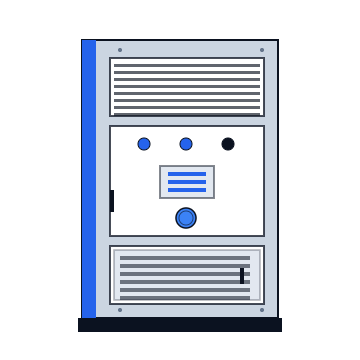
Un AC block est un produit de stockage d'énergie par batterie entièrement intégré qui réunit les modules de batterie, le BMS, la gestion thermique et le PCS (système de conversion de puissance) dans une seule unité. Contrairement aux DC blocks qui nécessitent un convertisseur externe, un AC block fournit directement du courant alternatif compatible réseau. Pour les équipes achats, cette architecture tout-en-un simplifie l'intégration système, réduit le nombre de relations fournisseurs et diminue la complexité du BoP.
Les AC blocks sont le plus souvent utilisés dans les applications C&I et les projets utility-scale de taille plus modeste, où la simplicité et la mise en service rapide sont prioritaires. Pour les grands projets, l'approvisionnement séparé de DC blocks et de PCS offre plus de flexibilité architecturale et de meilleures positions de négociation.
Spécifications clés
Quoi comparer pour évaluer les AC blocks
Lors de la présélection de pour un projet BESS, voici les spécifications techniques clés que les entreprises EPC, les développeurs et les intégrateurs de systèmes évaluent généralement :
Taux C
0,25C – 1C
Détermine la puissance maximale de charge/décharge par rapport à la capacité. La plupart des AC blocks sont conçus pour 0,5C, équilibrant performance et durée de vie.
Capacité énergétique
215 kWh – 10 MWh
Les AC blocks couvrent un large spectre — des unités C&I (215 kWh) aux conteneurs utility-scale (10 MWh). La taille optimale dépend de l'application et de l'architecture système.
Chimie
LFP dominant
Le LFP est la chimie standard pour les AC blocks en raison de son profil de sécurité et de sa durée de vie en cyclage. Certains produits C&I utilisent le NMC lorsqu'une densité énergétique plus élevée est requise.
Rendement aller-retour
85 – 92 %
Rendement mesuré côté AC, incluant les pertes du PCS. Typiquement légèrement inférieur aux systèmes DC block + PCS séparés, car le PCS intégré ne fonctionne pas toujours à son point de fonctionnement optimal.
Mode de refroidissement
Liquide ou air
Les AC blocks utility-scale de grande taille utilisent de plus en plus le refroidissement liquide. Les unités C&I plus petites utilisent souvent le refroidissement par air.
Certifications
UL 9540A, IEC 62619
Mêmes certifications de base que les DC blocks. Le PCS étant intégré, l'AC block doit en outre satisfaire les exigences de raccordement au réseau (ex. NF EN 50549) au niveau système.
FAQ
Questions fréquentes
Quelle est la différence entre un AC block et un DC block ?
Un AC block intègre la batterie et le PCS dans une seule unité et fournit directement du courant alternatif. Un DC block ne contient que la batterie, le BMS et la gestion thermique — il nécessite un PCS externe séparé pour le raccordement au réseau. Les AC blocks simplifient l'intégration ; les DC blocks offrent plus de flexibilité architecturale.
Quand faut-il choisir un AC block plutôt qu'un DC block ?
Les AC blocks conviennent particulièrement aux applications C&I, aux projets utility-scale de taille modeste et aux situations où une mise en service rapide, une complexité fournisseur réduite et un BoP minimal sont plus importants qu'une flexibilité architecturale complète. Pour les grands projets utility-scale (50+ MWh), la plupart des développeurs préfèrent les DC blocks avec PCS séparé pour optimiser indépendamment l'approvisionnement et la conception du système.
Quelles certifications un AC block doit-il avoir ?
Les AC blocks nécessitent les mêmes certifications de base que les DC blocks (UL 9540A, IEC 62619) plus des justificatifs supplémentaires pour le PCS intégré, notamment la conformité aux codes de réseau (NF EN 50549 en France) et la sécurité de l'électronique de puissance (IEC 62477). L'AC block étant une unité entièrement intégrée, les essais système doivent couvrir l'interaction de tous les composants.
Quelle est la plage de capacité typique pour les AC blocks ?
Les AC blocks vont d'environ 215 kWh (unités C&I compactes) à plus de 10 MWh (produits utility-scale conteneurisés). La plupart des AC blocks C&I se situent entre 200 kWh et 1 MWh, tandis que les variantes utility-scale offrent typiquement 3 à 10 MWh par unité. Le choix dépend de la taille du projet, des contraintes du site et de l'architecture système souhaitée.
Ce site utilise des analyses sans cookies pour comprendre comment les visiteurs l'utilisent. Aucune donnée personnelle n'est collectée ni partagée. Politique de confidentialité