Chinese energy storage manufacturer and BNEF Tier 1 supplier offering C&I and utility-scale BESS. Full-stack self-developed systems including BMS, EMS, and cloud platform.
CATL-ATL joint venture specializing in residential, C&I, and data center energy storage. Uses proprietary Kunlun LFP cells with 15,000-cycle lifespan and pioneered mass-produced semi-solid-state LFP cells with 32 GWh annual production capacity.
Chinese Tier 1 LFP cell manufacturer listed on the Hong Kong Stock Exchange. Produces high-capacity LFP cells and containerized BESS for utility-scale energy storage with 100 GWh annual capacity.
World's largest BESS battery maker by shipped capacity, vertically integrated from LFP cells to containerised DC blocks. TENER claims zero degradation.
Chinese state-owned rolling stock and energy group, ranked #3 globally in BESS integration by market share. Offers liquid-cooled containerized energy storage systems.
Canadian-Chinese solar and energy storage company with dedicated e-STORAGE subsidiary. Manufactures own LFP cells and utility-scale SolBank DC block systems.
Subsidiary of Hengxin Auto Group, ranked top 7 globally in ESS battery shipments. LFP cells (100–588Ah) and DC blocks up to 6.26 MWh. Datasheets available.
Tier 1 cell maker running the world's largest dedicated BESS factory at 60 GWh in Jingmen. LFP cells including the 628Ah Mr Big, plus DC block containers.
Top 4 global BESS integrator (Wood Mackenzie) and BloombergNEF Tier 1 manufacturer with 30+ GWh deployed across 300+ projects. Gen 8 Scalable Platform features proprietary 750Ah+ LFP cells in modular 10-foot units supporting 6-12+ MWh configurations with 440+ Wh/L energy density.
Chinese lithium mining and battery group with vertically integrated BESS division. Over 21 GWh deployed globally, offering LFP cells and containerized energy storage systems up to 10 MWh.
Chinese battery manufacturer listed on the Shenzhen Stock Exchange (300438) with 8 production bases and capacity exceeding 100 GWh. Produces LFP cells and utility-scale BESS systems.
Chinese energy storage manufacturer and BNEF Tier 1 supplier, ranked among China's top 3 C&I storage providers. Full-stack self-developed systems with 3S integration.
Energy storage division of JinkoSolar and BNEF Tier 1 manufacturer, offering utility-scale and C&I battery energy storage systems built on in-house LFP cell technology. SunTera containers deliver up to 6.25 MWh per 20ft unit with 10,000+ cycle life.
Tier 1 battery maker and major BESS cell supplier, moving into LFP for utility storage alongside NMC. Gigafactories in Korea, Poland, the USA and China.
Chinese smart grid and energy storage company listed on the Shanghai Stock Exchange. Offers liquid-cooled battery containers, energy storage cabinets, and integrated EMS platforms.
Swiss-headquartered energy storage company manufacturing LFP-based BESS solutions in Turkey. Product range spans utility-scale DC containers and MV skids to commercial AC cabinets.
Vertically integrated energy storage company manufacturing LFP cells (280Ah to 783Ah solid-state) and containerized BESS up to 8.3 MWh per unit. Over 8 GWh installed globally across 40+ countries with 260+ safety certifications and pioneering solid-state battery technology.
Leading modular LFP battery system manufacturer for C&I and utility-scale BESS. Container-based L-series and PowerCube rack systems are deployed across European and APAC markets.
Chinese BESS manufacturer offering modular cabinet and container energy storage from 120 kWh to 5 MWh, standalone PCS, and smart microgrid controllers.
BloombergNEF Tier 1 energy storage manufacturer that expanded from solar into comprehensive BESS solutions through subsidiary SYL Battery. Offers vertically integrated products spanning LFP cells, modules, PCS, and containerized systems with 15 GWh+ annual production capacity.
French battery manufacturer and TotalEnergies subsidiary specializing in high-reliability BESS for industrial and grid applications. Intensium Max+ is their flagship utility-scale BESS container.
Chinese publicly listed smart energy company specializing in PV inverters and energy storage systems. Manufactures utility-scale PCS and battery containers (ORI series) as well as commercial and industrial integrated storage solutions.
BloombergNEF Tier 1 energy storage manufacturer with vertically integrated LFP cell production (102Ah to 684Ah) and containerized BESS systems. NoahX 3.0 delivers 6.528 MWh per 20ft container with 15,000+ cycle life and AI-based active balancing.
Chinese cable and energy group offering utility-scale liquid-cooled BESS containers with self-developed integrated PCS. Active in energy storage since 2012.
Chinese BESS manufacturer specializing in PCS, battery packs, BMS, and complete energy storage systems. Top 10 Chinese utility-scale BESS OEM supplier with 100+ large-scale projects installed globally.
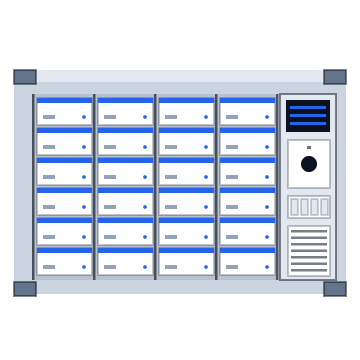
DC block là một đơn vị độc lập kết hợp các mô-đun pin, rack, BMS và hệ thống quản lý nhiệt tích hợp thành một khối sẵn sàng vận hành ở phía một chiều (DC). Trong BESS utility-scale, nhiều DC block được kết nối với PCS (hệ thống chuyển đổi công suất) tập trung hoặc theo chuỗi (string), chuyển đổi dòng một chiều thành dòng xoay chiều tương thích với lưới điện. DC block là cấp mà đội ngũ mua sắm đánh giá dung lượng năng lượng, độ phức tạp tích hợp hệ thống và đặc tính suy giảm dài hạn — và chiếm tỷ trọng lớn nhất trong CAPEX của một BESS.
Phần lớn DC block utility-scale sử dụng hóa học LFP ở dạng container hoặc tủ với dung lượng 4–9+ MWh. Làm mát bằng chất lỏng hiện là tiêu chuẩn cho các dự án quy mô nhiều megawatt-giờ — cho phép nhiệt độ cell đồng đều hơn và mật độ công suất cao hơn so với làm mát bằng không khí.
Thông số kỹ thuật chính
So sánh gì khi đánh giá DC block
Khi đánh giá cho một dự án BESS, đây là các thông số kỹ thuật chính mà nhà thầu EPC, nhà phát triển và nhà tích hợp hệ thống thường xem xét:
Tốc độ C
0.25C – 1C
Tốc độ C xác định công suất sạc/xả tối đa so với dung lượng. Tốc độ C cao hơn (≥ 0.5C) cho phép kết hợp nguồn doanh thu; tốc độ thấp hơn (0.25C) tối ưu cho chu kỳ chậm và ít suy giảm hơn.
Dung lượng năng lượng
4 – 9+ MWh
Dung lượng năng lượng mỗi DC block ảnh hưởng trực tiếp đến diện tích mặt bằng, độ phức tạp cáp và chi phí. Khối lớn hơn giảm số lượng đơn vị và kết nối BoP cần thiết.
Hóa học
LFP chiếm ưu thế
LFP là hóa học tiêu chuẩn cho DC block utility-scale nhờ an toàn và tuổi thọ chu kỳ. Một số nhà sản xuất cung cấp biến thể NMC cho ứng dụng ưu tiên mật độ năng lượng.
Hiệu suất chu trình
85 – 95 %
Đo tại cấp DC block (hiệu suất chu trình AC bao gồm thêm tổn thất PCS và máy biến áp). Hiệu suất cao hơn cải thiện LCOS và lợi nhuận từ chênh lệch giá.
Phương pháp làm mát
Chất lỏng hoặc không khí
Làm mát bằng chất lỏng cho phép mật độ công suất cao hơn và nhiệt độ cell đồng đều hơn. Làm mát bằng không khí đơn giản hơn nhưng đang được thay thế bởi làm mát chất lỏng trong utility-scale.
Chứng nhận
UL 9540A, IEC 62619
UL 9540A đánh giá đặc tính lan truyền cháy ở cấp hệ thống. IEC 62619 quy định an toàn cell pin. Yêu cầu khu vực có thể đòi hỏi các tiêu chuẩn bổ sung.
Câu hỏi thường gặp
Câu hỏi thường gặp
Sự khác biệt giữa DC block và AC block là gì?
DC block cung cấp dòng một chiều và phải kết nối với PCS bên ngoài để chuyển đổi thành dòng xoay chiều tương thích với lưới điện. AC block tích hợp PCS và pin trong một đơn vị duy nhất và cung cấp trực tiếp dòng xoay chiều. DC block linh hoạt hơn về kiến trúc và được ưa chuộng cho hầu hết dự án utility-scale, trong khi AC block đơn giản hóa tích hợp và phổ biến hơn trong ứng dụng C&I nhỏ hơn.
Tại sao hầu hết dự án BESS utility-scale sử dụng DC block?
DC block cho phép nhà phát triển và nhà thầu EPC lựa chọn độc lập nhà cung cấp PCS và nhà sản xuất pin, và tối ưu hóa kiến trúc hệ thống (tập trung hay theo chuỗi) phù hợp với yêu cầu từng dự án. Tính mô-đun này cải thiện vị thế đàm phán trong mua sắm, đơn giản hóa thay thế khi bảo hành và cho phép mở rộng dung lượng kinh tế hơn trong suốt vòng đời dự án.
DC block cần những chứng nhận gì?
Hai chứng nhận được yêu cầu phổ biến nhất là UL 9540A (phương pháp thử nghiệm lan truyền cháy ở cấp hệ thống) và IEC 62619 (yêu cầu an toàn cho pin lithium-ion công nghiệp). Tùy thuộc khu vực và chủ đầu tư, có thể yêu cầu thêm các tiêu chuẩn như UN 38.3 (vận chuyển), IEC 62477 (an toàn thiết bị điện tử công suất), cấp bảo vệ IP và yêu cầu phòng cháy cụ thể của dự án.
Dung lượng DC block ảnh hưởng đến chi phí dự án như thế nào?
DC block lớn hơn (ví dụ: 5+ MWh mỗi đơn vị) giảm tổng số đơn vị cần thiết cho dự án, giảm cáp, BoP và công sức lắp đặt. Tuy nhiên, các đơn vị lớn hơn cần thiết bị nâng hạ nặng hơn cho vận chuyển và đặt vị trí. Đội ngũ mua sắm cần cân bằng kích thước DC block với logistics mặt bằng, yêu cầu móng và chiến lược mở rộng dung lượng.
Trang web này sử dụng phân tích không cookie để tìm hiểu cách khách truy cập sử dụng trang. Không có dữ liệu cá nhân nào được thu thập hoặc chia sẻ. Chính sách bảo mật